
Many businesses start with energy, ambition, and big goals. Yet after the initial momentum fades, growth becomes unpredictable. Some months bring new customers, while others feel painfully slow.
The problem usually isn’t a lack of effort. In fact, many business owners work extremely hard. The real issue is that growth often stalls because of strategic mistakes that quietly limit progress.
Understanding these mistakes can help businesses avoid wasted time, wasted budgets, and frustration.
In this article, we’ll explore seven common mistakes that stop businesses from achieving consistent growth and what you can do differently.
1. Operating Without a Clear Growth Strategy
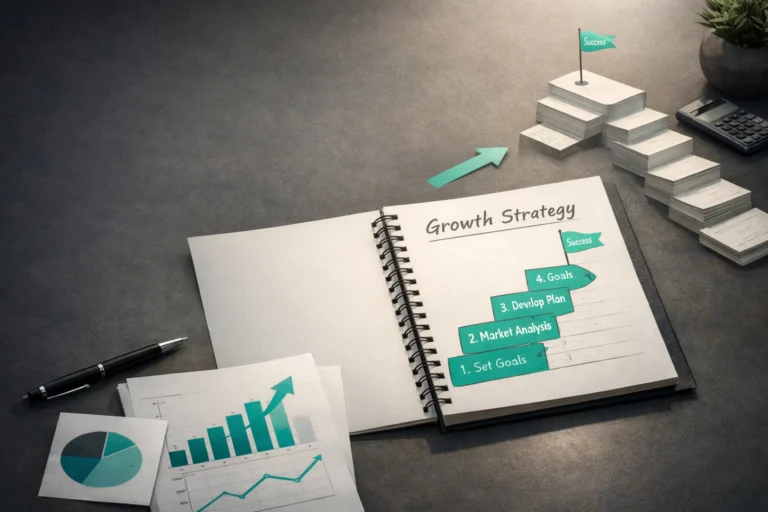
One of the biggest mistakes businesses make is relying on random marketing activities instead of a structured strategy.
Many companies jump between tactics:
- running social media ads
- posting on different platforms
- launching promotions
- trying new tools
Without a strategic plan, these efforts rarely produce consistent results.
A growth strategy should clearly define:
- your target market
- your positioning
- your key marketing channels
- measurable growth goals
When businesses operate without this structure, marketing becomes reactive instead of strategic.
2. Trying to Market to Everyone
Another common mistake is attempting to attract everyone instead of focusing on a specific audience.
When messaging tries to appeal to everyone, it usually ends up resonating with no one.
Businesses grow faster when they clearly identify their ideal customer profile.
Ask questions like:
- Who benefits most from our product or service?
- What problems are we best positioned to solve?
- Which customers generate the most value?
Narrowing your focus allows your marketing to become more relevant and effective.
3. Prioritizing Tactics Instead of Strategy
Many businesses constantly chase the latest marketing trend.
One month it’s social media growth hacks. The next month it’s paid ads or influencer marketing.
While tactics can be helpful, they rarely produce long-term growth without strategic direction.
For example:
SEO without a content strategy will struggle to rank.
Paid ads without clear messaging often waste budget.
Social media without a clear brand position rarely converts followers into customers.
Successful companies focus on strategy first and tactics second.
4. Ignoring Customer Research
Businesses sometimes assume they know what their customers want. Unfortunately, assumptions can lead to costly mistakes.
Customer research is essential for understanding:
- real customer pain points
- buying motivations
- objections to purchasing
- expectations from a solution
Without these insights, marketing messages often miss the mark.
Talking directly with customers, analyzing feedback, and reviewing competitor positioning can reveal valuable information.
The more you understand your audience, the more effective your marketing becomes.
5. Weak Lead Generation Systems
Many businesses rely only on occasional marketing campaigns to generate leads.
The problem with this approach is inconsistency. When campaigns stop, leads disappear.
A better approach is building repeatable lead generation systems.
Examples include:
- SEO-driven content that attracts organic traffic
- downloadable resources that capture emails
- landing pages designed for conversion
- email sequences that nurture prospects
Lead generation should function like a pipeline rather than a one-time effort.
When systems are in place, businesses can attract leads continuously.
6. Poor Conversion Optimization
Even businesses with strong traffic can struggle with growth if their website doesn’t convert visitors into customers.
Common conversion problems include:
- unclear messaging
- weak calls-to-action
- confusing website navigation
- slow loading pages
- lack of trust signals
Improving conversion rates can dramatically increase growth without increasing traffic.
For example, increasing conversions from 2% to 4% effectively doubles results.
Small improvements often make a big difference.
7. Not Measuring Marketing Performance
Some businesses continue running marketing campaigns without measuring performance properly.
Without data, it becomes impossible to know:
- which channels generate the best leads
- which campaigns produce revenue
- which strategies waste budget
Successful companies regularly track metrics such as:
- website traffic
- lead conversion rates
- cost per lead
- customer acquisition cost
- lifetime customer value
When decisions are based on data instead of assumptions, marketing becomes far more effective.
Why Many Businesses Struggle With Consistent Growth
Consistent growth rarely comes from a single tactic.
Instead, it comes from combining several key elements:
- a clear strategy
- a defined audience
- effective marketing channels
- strong lead generation systems
- ongoing optimization
When even one of these elements is missing, growth often becomes unstable.
Businesses that build structured growth systems tend to achieve far more predictable results.
Final Thoughts
Growth rarely stops because businesses lack effort. More often, it stops because of strategic mistakes that limit progress.
Avoiding these mistakes can dramatically improve the effectiveness of your marketing and sales efforts.
Instead of relying on random tactics, focus on building a structured growth approach that includes clear goals, customer insights, and measurable systems.
When strategy, execution, and data work together, businesses are far more likely to achieve consistent, sustainable growth.